A short history of Neapolitan pizza
Neapolitan pizza has over 300 years of official history, and one of the world's best-loved recipes is named after a queen. According to the guide for making Neapolitan pizza introduced in the Official Gazette of the Italian Republic in 2010 (series no. 56), it officially appeared between 1715 and 1725. The most popular pizzas of the 1700s were the Marinara (1734) and the Margherita (1796-1810), later offered to the Queen of Italy in 1889 during her visit to Naples. The famous writer Franco Salerno describes it as the greatest Neapolitan gastronomic invention.
Ancient Rome
The first pizzas (a kind of flatbread) appeared in Mesopotamia and ancient Egypt, where women ground wild grains into a coarse flour in an improvised stone vessel, kneaded it, and baked it on hot stone. These focaccia were used both as food and as currency.
In ancient Rome, as early as the 50s AD, citizens could collect - for free, using a stone token - a dish called picea, probably the ancestor of today's pizza. Evidence found in Pompeii and Neapolis (then a Greek colony that later became Naples) shows that, around 74 AD, a round bread made of flour was widely eaten.
The year 1000
The word "pizza" was first mentioned in a text from the year 997, found somewhere south of Naples. According to it, a farm worker had to give the town's bishop "duodecim pizze" (twelve pizzas) at Christmas and Easter.
The term likely comes either from the Greek pikte (kneaded dough), which became picta in Latin and later pitta; or from the Latin pinsa ("to beat" the dough); or from picea (the char of the oven); or from the Italian pizzicare ("to pull" the pizza out of the oven).
In Naples this dish became hugely popular, especially among the poor - cheap, tasty and filling. It had a thicker rim than its center, probably so people could hold a slice even with dirty hands, eat the part they wanted, and then throw away the crust.
The years 1600-1800
The true Neapolitan pizza was born around 1600 out of Neapolitan culinary genius, from the need to make traditional bread tastier. At first it was a bread dough baked in wood ovens, seasoned with garlic, lard and coarse salt - or, in the richer version, with caciocavallo and basil. Even after oil replaced lard, the history of modern pizza truly began when tomatoes were brought to Europe from the Americas (from Peru) by Spanish colonists.
In the early 1700s, Naples filled up with small shops called pizzerias, specialized in making Neapolitan pizza. Their success reached Ferdinand of Bourbon, king of the city, who broke court etiquette to eat this dish at one of the most famous pizzerias in town, where ordinary people ate. From then on, pizzerias became fashionable places.
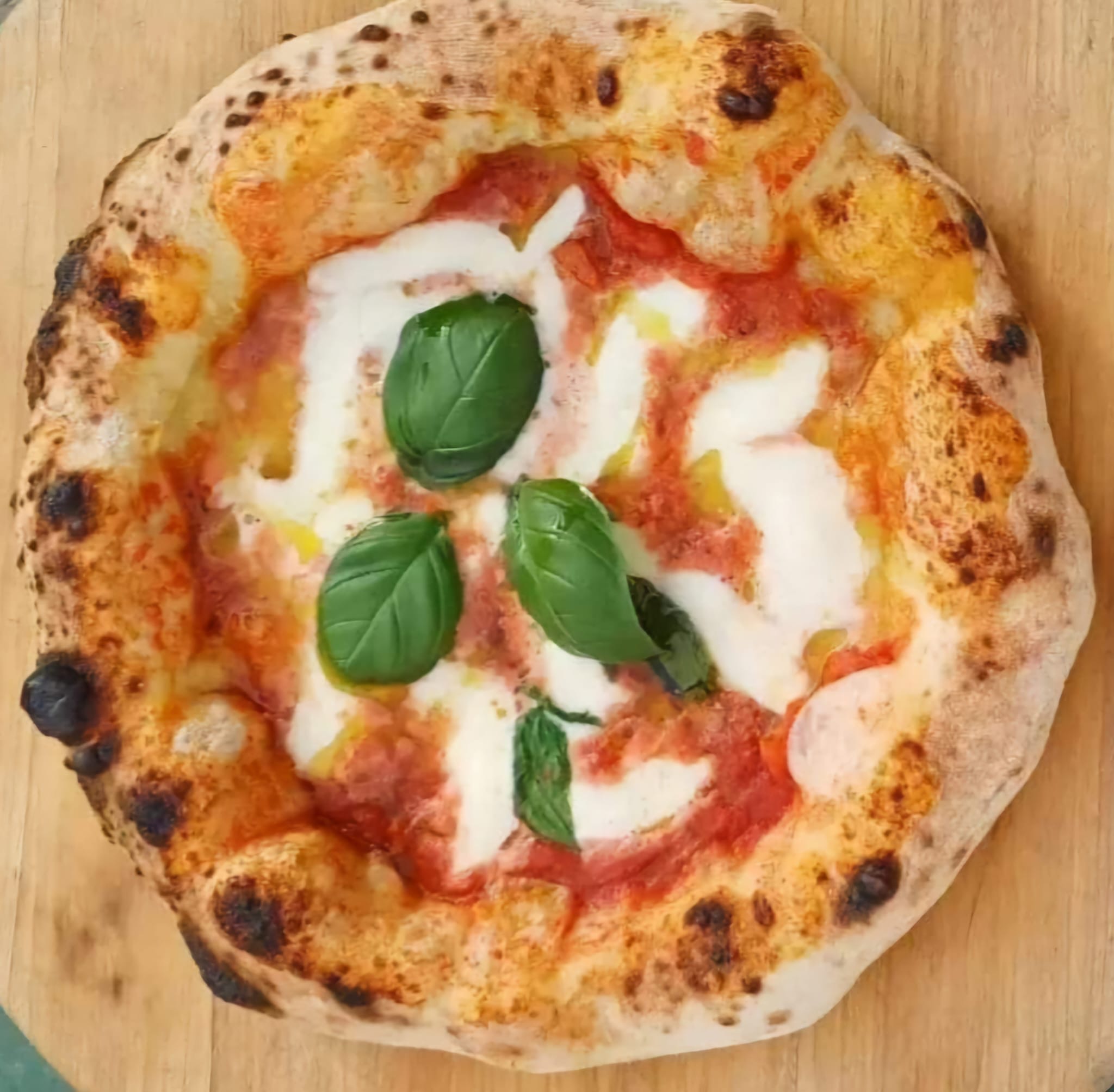
The most popular pizzas of the time were the Marinara (tomatoes, garlic and oregano, created in 1734) and the Margherita (tomatoes, mozzarella and basil, created between 1796 and 1810). That is roughly how Neapolitan pizza was born.
After 1800
Over time, pizza gained popularity even among the wealthy, who would travel to the poor districts of Naples just to taste the recipes made by the pizzaioli. The finest pizzaiolo of the era was considered to be Raffaele Esposito, who worked at the "Pietro… e basta" pizzeria, opened in 1889 and still around today as "Pizzeria Brandi".
Legend has it that in 1889, King Umberto I of Italy and his wife, Queen Margherita, touring the country, passed through Naples. Fascinated by the flatbread enjoyed by ordinary Italians, the queen asked to taste it. She loved it so much that she asked Esposito to prepare several varieties.
Esposito made three pizzas for the Italian royals: Mastunicòla (lard, cheese and basil), Marinara (tomatoes, garlic, oil and oregano), and one with tomatoes, mozzarella and basil - whose colors mirrored the Italian flag. The queen loved the last one so much that she praised it in writing. In thanks, Esposito named it after her: the Pizza Margherita. It went on to become one of the most important symbols of Italian gastronomy worldwide.
Around the same period, pizzaioli began using brick ovens for baking. Another famous Naples pizzeria - still believed today to make the true "Marinara" and "Margherita" - is "Da Michele", opened in the 1870s.
After 1900
Pizza remained a typically Neapolitan attraction until the early 1900s, when it began to spread across the rest of Italy. After its boom in Naples, true Neapolitan pizza "emigrated" - conquering first all of Italy and then the world - though it only reached the north of the country after World War II.
Thanks to the migration wave that pushed people from Campania toward other countries, pizza made its way into American cities too, especially New York and Chicago. American soldiers also helped its popularity after tasting it on the Italian front.
This is also when pizza a portafoglio (folded, by-the-slice pizza) appears, wrapped like a wallet. We find it in "The Belly of Naples" by journalist and novelist Matilde Serao, who describes Naples street food at the turn of the 20th century - proof that pizza by the slice was invented in Italy, not the United States, and that the boys who carried it through the streets and to people's homes were practicing an early form of delivery.
Today
Pizza's fame soon spread beyond Naples to all of Italy. In May 1984, Neapolitan pizzaioli drew up a production certification, officially registered by notary Antonio Carannante in Naples - a first step toward protecting the product. Then, in 2017, the art of the Neapolitan pizzaiolo was recognized by UNESCO as intangible heritage of humanity.
Precisely because pizza has become so common, there is a risk of losing its simplicity and authenticity. That, in fact, is the secret of Neapolitan pizza: the quality of the ingredients, combined with the skill of the one who makes it (the pizzaiolo), make it an exceptional dish - tasty and easy to digest.
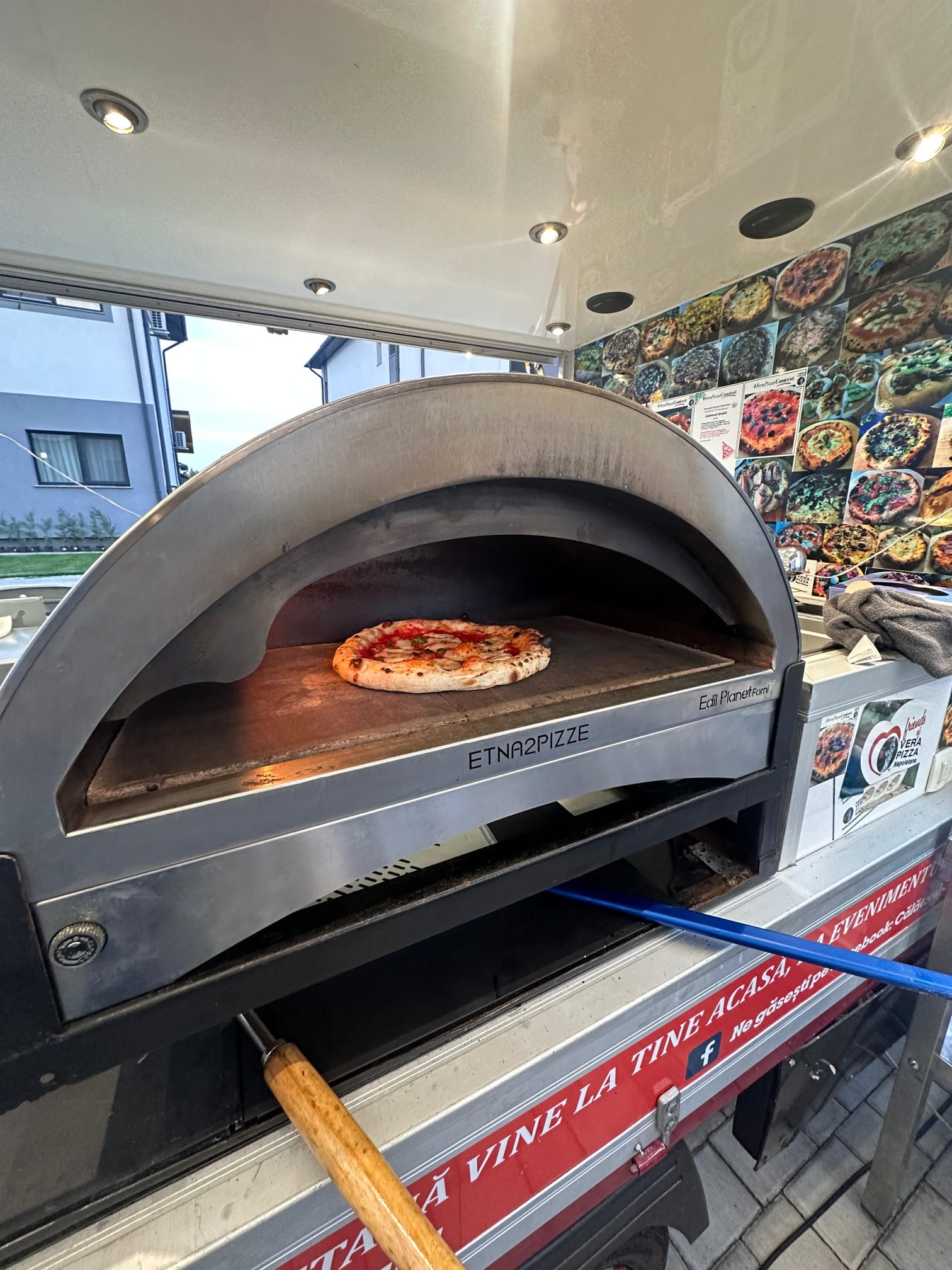
To this end, the Associazione Verace Pizza Napoletana (AVPN), founded in 1984, set strict rules through its Codex of the Neapolitan pizzaiolo: baking in a wood oven at around 485°C for 60-90 seconds; a hand-made base; a maximum diameter of 35 cm; only San Marzano tomatoes grown on the slopes of Vesuvius, and Fior di Latte or di Bufala mozzarella. Through this Codex, the AVPN recognizes only the Margherita and the Marinara as authentic Neapolitan pizzas.
Since 2009, the Margherita has been one of three Neapolitan pizzas with the EU TSG label (Traditional Speciality Guaranteed), alongside the Marinara and the Margherita Extra (with Mozzarella di Bufala Campana DOP, fresh basil and tomatoes). Today a contemporary Neapolitan pizza has also emerged - taller rim, high hydration, long fermentation - yet the core methods remain the same. The topping keeps evolving in flavor, color and creativity, carrying the signature of each pizzaiolo.
- Mr. Pizzerota
Want authentic Neapolitan pizza at your event?
We bring the oven, the ingredients from Italy and the live show. Just tell us your date and guest count.